
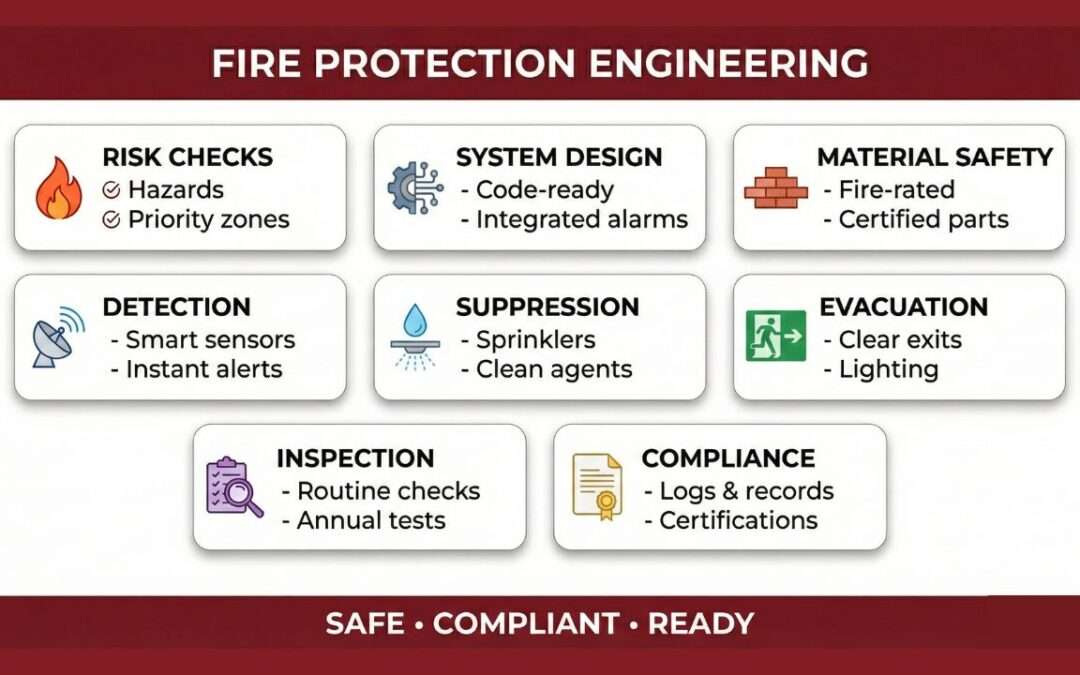
Introduction: One Fire Incident Can Change Everything
Every year, thousands of buildings suffer fire related damage not because they lacked fire protection systems but because those systems were poorly designed, installed incorrectly, or never maintained.
Fire incidents rarely happen due to one big mistake.
They happen because of many small oversights that add up.
That’s where fire protection engineering comes in.
This discipline isn’t just about installing sprinklers or meeting building codes.
It’s about designing an entire ecosystem of safety one that protects lives, property, and business continuity.
In this guide, you’ll learn the best practices used by top fire protection engineers to ensure safety and compliance in every type of building.
Let’s get started.
1. Why Fire Protection Engineering Matters More Than Ever
Most building owners think fire protection is simply a “compliance step.” Check these boxes, install that equipment, get approval, and forget about it.
But real fire protection engineering goes far beyond passing inspections.
Here’s why it’s mission critical:
1. Lives depend on it.
Evacuation routes, alarm response times, and smoke control systems all determine whether people can escape safely.
2. A single fire can shut down operations for months.
Even minor sprinkler activation can cause expensive water damage if systems aren’t designed properly.
3. Insurance companies increasingly demand robust fire protection.
Better design = lower premiums.
4. Codes become stricter every year.
Buildings must stay continuously compliant, not just approved during construction.
5. Fire risks are evolving.
Lithium ion batteries, server rooms, data centers, high rise towers modern risks require smarter systems.
When you take all this into account, fire protection engineering becomes a strategic investment, not an obligation.
2. The Three Layers of Fire Protection Engineering (Most People Miss One)
A fire safe building is built on three layers. Miss even one layer, and the entire protection system collapses.
Layer 1: Passive Fire Protection (PFP)
These are structural systems designed to contain fire and smoke.
Examples include:
- Fire rated walls and ceilings
- Fire doors
- Fire dampers
- Fire resistant coatings
- Compartmentation
Why it matters:
PFP slows the spread of fire long enough for people to escape and responders to arrive.
Layer 2: Active Fire Protection (AFP)
These are systems that detect or suppress fires.
Examples include:
- Smoke detectors
- Fire alarms
- Sprinkler systems
- Gas based suppression
- Foam systems
- Fire extinguishers
Why it matters:
AFP reacts immediately, reducing damage before the fire grows.
Layer 3: Life Safety Systems
These ensure that people can safely exit the building.
Examples:
- Emergency lighting
- Exit signage
- Egress routes
- Stairwell pressurization
- Voice communication systems
Why it matters:
Even the best detection system is useless if people cannot evacuate safely.
3. Fire Risk Assessment: The Step Every Building Must Take First
Before designing anything, engineers conduct a Fire Risk Assessment (FRA).
This determines:
- What could ignite
- How fire could spread
- Who is at risk
- How quickly evacuation must occur
- What systems are needed for mitigation
An FRA acts like a blueprint. Without it, engineers are guessing and that’s how compliance failures happen.
What a world class FRA includes:
- Building type and occupancy
- Hazardous materials
- Fire load density
- Electrical system risks
- Ventilation patterns
- Exit route analysis
- Water supply evaluation
- Response time from local fire service
Most common FRA mistakes:
- Using outdated building drawings
- Not accounting for storage areas
- Ignoring human behavior patterns
- Not updating the FRA after renovations
A good FRA is a living document, not a one time report.
4. Codes and Standards: Your Roadmap to Compliance
Fire protection engineering is governed by strict codes and standards.
Ignoring even one detail can lead to rejections, delays, and expensive redesigns.
Key codes and standards:
- NFPA (National Fire Protection Association): Gold standard for fire safety globally
- IBC (International Building Code): Covers construction and life safety
- IFC (International Fire Code): Covers ongoing operation and maintenance
- Local AHJ Regulations: Every region has unique requirements
How engineers stay compliant:
- Aligning each system with relevant NFPA standards
- Coordinating early with Authority Having Jurisdiction (AHJ)
- Submitting shop drawings and calculations
- Conducting pre inspection tests before official approval
The biggest compliance mistake:
Adding fire protection systems at the end of the project instead of during design.
When fire protection is integrated early, you avoid:
- Pipe rerouting
- Ceiling redesign
- Extra cost
- Delays in approvals
5. Best Practices for Fire Protection System Design
Design is where most fire protection systems succeed or fail.
Here are the best practices top engineers follow:
Design Practice #1: Integrate Early With Architects and MEP Teams
Early coordination ensures:
- No clashes with HVAC ducting
- Proper sprinkler spacing
- Adequate ceiling height
- Correct pump and riser placement
Work done early = massive savings later.
Design Practice #2: Understand the Building’s Usage Pattern
A warehouse needs a totally different system than a hospital.
A data center requires gas suppression, while a hotel needs enhanced egress planning.
Design MUST match:
- Occupancy
- Operations
- Hazard level
- Building height
Design Practice #3: Choose the Right Suppression System
Not every space needs a standard wet sprinkler.
Choose based on hazard type:
- Wet sprinklers → offices, malls, hotels
- Dry sprinklers → cold storage, parking areas
- Pre action systems → data centers, museums
- Water mist systems → commercial kitchens
- Foam systems → fuel storage areas
- Clean agent gas systems → server rooms
Using the wrong system is one of the top causes of insurance claims.
Design Practice #4: Ensure Adequate Water Supply and Pressure
This includes calculations for:
- Fire pump size
- Sprinkler demand
- Hydrant flow requirement
- Emergency reserve capacity
A system is useless without enough water.
Design Practice #5: Build Redundancy Into the Design
Critical facilities need:
- Backup pumps
- Emergency alarms
- Secondary egress routes
- Fire rated enclosures
Redundancy keeps the building safe even if one system fails.
6. Installation and Commissioning: Where Most Projects Go Wrong
Design is only half the job.
If installation is poor, even the perfect design will fail inspection.
Best practices for installation:
- Hire certified technicians
- Follow manufacturer guidelines
- Ensure proper pipe installation and slope
- Use approved fittings and valves
- Label everything clearly
- Maintain a photographic record of hidden installations
Commissioning Checklist
Before handing over the system, engineers test:
- Sprinkler flow
- Pump operation
- Alarm response time
- Manual call point activation
- Smoke detector sensitivity
- Gas suppression seal integrity
- Fire door closers
- Emergency lighting duration
Nothing should be left untested.
7. Maintenance: The #1 Reason Buildings Fail Inspections
Neglected maintenance is the leading cause of fire safety failures.
A system that isn’t maintained is just as dangerous as having no system at all.
Essential maintenance cycles:
Monthly
- Alarm panel inspection
- Pump house check
- Fire extinguisher visibility
Quarterly
- Sprinkler valve testing
- Smoke detector cleaning
- Hydrant flow test
Semi Annual
- Gas suppression system check
- Kitchen hood system service
Annual
- Full building fire drill
- Sprinkler system inspection
- Pump performance test
- Fire door inspection
Common Maintenance Gaps
- Blocked sprinkler heads
- Expired extinguishers
- Fire doors propped open
- Alarms put in “silent” mode
- Obstructed egress routes
- Dead emergency lights
Each of these can cost you your compliance certificate.
8. Fire Safety Training: The Human Layer of Protection
Fire protection isn’t just about equipment.
It’s about preparing people to respond correctly.
Training must include:
- Evacuation drills
- Extinguisher usage
- Emergency communication protocols
- Identifying hazards
- Meeting point instructions
- Handling fire in kitchens, labs, or industry specific areas
Why training matters:
- Reduces panic
- Cuts response time
- Helps evacuate vulnerable people
- Ensures safety even if systems fail
Pro Tip:
Conduct drills unexpectedly.
Real emergencies don’t come with warnings.
9. Technology Innovations Transforming Fire Protection Engineering
Modern buildings are smarter and so is fire protection.
Innovations you should know about:
1. AI based Smoke Detection
Detects smoke patterns faster than traditional sensors.
2. Smart Sprinkler Systems
Target specific areas instead of activating an entire zone.
3. IoT Monitoring
Fire pumps, valve positions, flow switches all monitored remotely.
4. Thermal Imaging Sensors
Detect overheating equipment before a fire starts.
5. Cloud Based Compliance Logs
Automatic records that help during audits.
6. Real Time Alert Apps
Notify building occupants instantly.
Technology reduces response time and improves accuracy the two biggest factors in fire survival.
10. Final Fire Safety + Compliance Checklist
Use this quick checklist to ensure your building stays safe year round:
✔ Fire Risk Assessment updated yearly
✔ Codes and standards compliance verified
✔ Passive and active protection systems installed correctly
✔ Fire pumps tested annually
✔ Sprinklers inspected and unobstructed
✔ Smoke detectors cleaned and working
✔ Fire extinguishers accessible
✔ Exit routes clear and illuminated
✔ Fire doors functioning
✔ Emergency communication system tested
✔ Building staff trained every 6 months
✔ Digital maintenance logs updated
If you can check all these boxes, you’re already ahead of 90% of buildings.
Conclusion: Fire Protection Engineering Is Not Optional It’s Essential
A safe building isn’t created by chance. It’s created through:
- Smart planning
- Precision engineering
- Quality installation
- Continuous maintenance
- Proper training
- Code compliance
Fire protection engineering ensures each of these elements work together to prevent disaster and protect the people who rely on your building every day.